
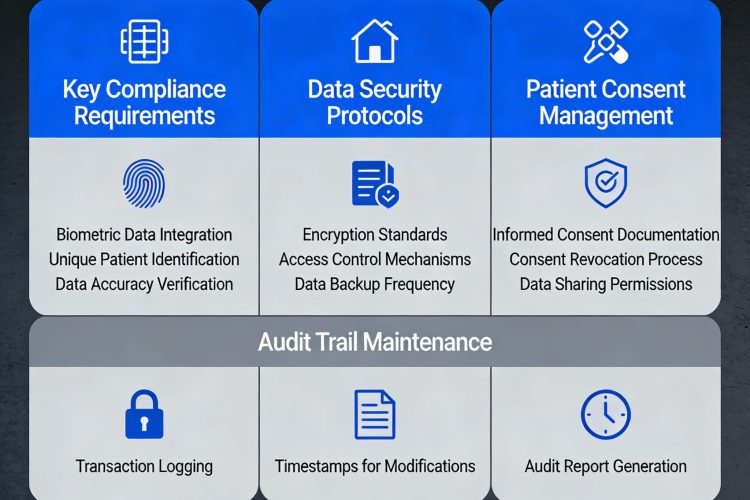
Healthcare in Pakistan is changing fast. In the past, hospitals and clinics worked in silos. A patient might have a different file at every doctor they visited. This made it hard for doctors to see a full health history. Today, the government is moving toward a smarter system. This new vision is called One Patient, One ID in Pakistan. By linking the CNIC to medical records, the country is creating a more connected health network.
For hospitals to be part of this change, they must follow NADRA compliance rules. This means their hospital management information system (HMIS) must be able to talk to the NADRA database. iTack Solutions is at the forefront of this shift. We provide tools that make this transition easy for healthcare providers.
Why NADRA Compliance Matters for Modern Hospitals
The National Database and Registration Authority (NADRA) holds the keys to identity in Pakistan. In a hospital setting, knowing exactly who a patient is can save lives. When a hospital follows NADRA compliance standards, it ensures that every patient is verified through their official 13-digit identity number.
This compliance is not just about following a law, it is about making sure patient data is accurate and safe. Many hospitals still use manual entry. This leads to spelling mistakes and lost files. By using HMIS CNIC verification, a hospital can pull accurate data directly from the national records. This reduces human error and makes the registration process much faster.
The Goal of One Patient, One ID
The One Patient, One ID initiative aims to give every citizen a single medical record. No matter which city or hospital a patient goes to, their history stays with them. This is made possible by using the CNIC as the primary key.
The key benefits of a unified ID:
- Continuity of Care: Doctors can see past allergies and treatments instantly. This helps them make better decisions during emergencies.
- National Health Data: The government can track disease trends better. For example, knowing which areas have high rates of diabetes helps in planning health camps.
- Easier Referrals: When a patient moves from a small clinic to a big hospital, their medical records move with them digitally.
Role of iTack Solutions in Healthcare Compliance
iTack Solutions helps hospitals bridge the gap between old paper files and new digital medical records. Our core service, the Hospital Management Information System (HMIS), is built to meet the highest electronic health records (EHR) security standards. We understand that integrating with a national database can seem scary for many hospital owners. That is why we handle the technical side.
We make sure your hospital management system is fully compatible with NADRA APIs. This allows for real-time patient authentication at the front desk. When a patient arrives, their thumbprint or CNIC scan tells the system exactly who they are. This is a core part of how we support healthcare providers across Pakistan.
How to Integrate NADRA Verification in HMIS?
Many administrators ask: how to integrate NADRA verification in HMIS? The process involves connecting your hospital software to the NADRA gateway.
- API Connection: Your software sends a request to NADRA when a patient provides their CNIC.
- Biometric Matching: For higher security, the system asks for a thumbprint. This is matched against the national database.
- Data Retrieval: Once verified, the system pulls basic info like name, age, and address. This populates the NADRA EMR (Electronic Medical Record) file automatically.
iTack Solutions provides the software needed for this. We set up the biometric scanners and the secure servers. This ensures that the data flow is fast and never leaks sensitive information.
Eliminating Duplicate Patient Records
One of the biggest headaches for hospital staff is having multiple files for the same person. This happens when a patient registers with a nickname or a different phone number. By using a universal medical record number based on the CNIC, this problem goes away.
When the system sees a CNIC that is already in the database, it simply reopens the existing file. This helps to eliminate duplicate patient records completely. It saves space on servers and makes sure the doctor is looking at the most recent information. A clean database is a more efficient database.
Medical Identity Theft Prevention
Identity theft is a growing concern in the digital age. In healthcare, someone might use another person’s ID to get insurance benefits or free medicine. This is why medical identity theft prevention is so important.
By requiring real-time patient authentication, hospitals ensure the person receiving treatment is the actual owner of the ID. This protects the hospital from fraud. It also protects the patient from having the wrong information added to their health history. If someone else gets treated under your name, it could change your blood type or allergy records, which is dangerous.
Interoperability in Healthcare
Interoperability in healthcare means that different systems can talk to each other. If a lab uses one software and the pharmacy uses another, they need a common language. Using NADRA medical records as the base provides that language.
When everyone uses the same verification method, the data flows better. A lab report from a clinic in Karachi can be viewed by a surgeon in Lahore. This level of centralized healthcare data management is only possible when we use a standard identity system like the CNIC.
Improving Patient Experience with Digital Records
Transitioning to digital medical records is not just for the staff. It makes things better for the patients too.
- No More Lost Files: Patients do not have to carry heavy folders of old X-rays and reports.
- Faster Check-in: Providing a CNIC is much faster than filling out a long registration form.
- Better Safety: If a patient is unconscious, the hospital can find their medical history and emergency contacts via their CNIC.
Security Standards for EHR and NADRA Data
Keeping health data safe is a top priority. iTack Solutions follows strict electronic health records (EHR) security standards. When we connect your hospital to the NADRA database, we use encrypted tunnels. This means no one can “listen in” on the data as it travels.
We also make sure that only authorized staff can see certain parts of a record. For example, a receptionist might see the patient’s name, but only the doctor can see the clinical notes. This protects privacy while still allowing for a centralized healthcare data management approach.
Conclusion
The move toward NADRA compliance and One Patient, One ID is the future of healthcare in HMIS Pakistan. By linking the CNIC with medical records, we are building a system that is safer and faster. Hospitals that adopt these changes now will lead the way in providing better care.
At iTack Solutions, we are ready to help you upgrade your HMIS. Our team can integrate NADRA verification into your current workflow with ease. Do not let your hospital fall behind in the digital age.
Contact iTack Solutions today and book a demo to see how our HMIS can bring your hospital into full NADRA compliance.
